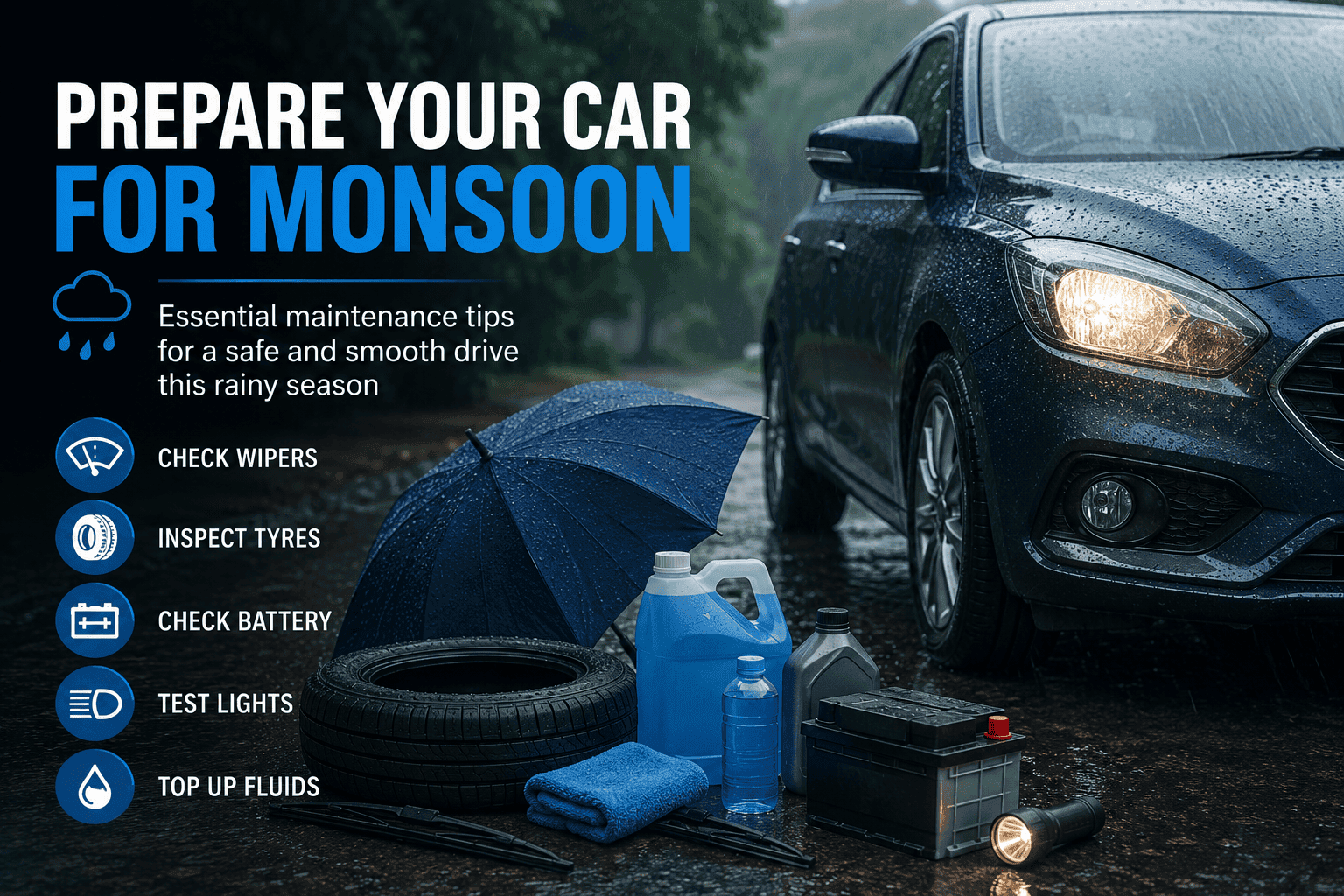
Learn how to prepare your car for the monsoon season with practical maintenance tips
The monsoon season brings welcome relief from the heat, but it also creates challenging driving conditions. Heavy rainfall, waterlogged roads, reduced visibility, and increased humidity can affect both your driving experience and your vehicle's health. Preparing your car before the rainy season helps improve safety and reduces the chances of expensive repairs.
Why Monsoon Maintenance Matters
Rainwater, mud, and standing water accelerate wear on many vehicle components. Electrical systems, brakes, tyres, suspension, and underbody parts are particularly vulnerable if regular inspections are ignored.
A few preventive maintenance checks before the rains can save significant repair costs later.
Essential Checks Before the Monsoon
Before the rainy season begins, inspect the following:
Tyre tread depth and air pressure
Windshield wiper condition
Washer fluid level
Headlights, fog lamps, and tail lamps
Brake performance
Battery condition
Door and window rubber seals
Air conditioning and cabin filter
Any worn or damaged component should be replaced before driving in heavy rain.
Tyres Are Your First Line of Safety
Tyres play the most important role during wet-weather driving. Worn tyres reduce grip and increase the risk of hydroplaning.
Check that:
Tread depth is adequate.
There are no cracks or bulges.
Tyre pressures match the manufacturer's recommendations.
Avoid driving with unevenly worn tyres during the monsoon.
Battery and Electrical System
High humidity can affect electrical connections and accelerate battery deterioration.
Have the battery terminals cleaned and ensure all exterior lights function properly. Water entering damaged wiring can lead to unexpected electrical faults.
Brake Inspection
Wet roads increase braking distances.
Listen for unusual noises, check brake pedal feel, and have brake pads inspected if they are nearing the end of their service life.
Never ignore reduced braking performance during the rainy season.
Visibility Is Critical
Good visibility is essential during heavy rain.
Replace wiper blades that leave streaks, refill washer fluid, and clean both the inside and outside of the windshield regularly.
Anti-fog treatment for the windshield can also improve visibility during humid conditions.
Underbody Protection
Waterlogged roads expose the underbody to mud, moisture, and contaminants.
Regular underbody cleaning helps prevent corrosion and protects suspension and brake components from premature wear.
Emergency Kit Checklist
Keeping a small emergency kit in the vehicle is always recommended.
Item | Purpose |
|---|---|
Flashlight | Night-time emergencies |
Tyre inflator | Low tyre pressure |
Tow rope | Vehicle recovery |
First-aid kit | Minor injuries |
Portable phone charger | Emergency communication |
Reflective warning triangle | Roadside safety |
Safe Driving Tips During Rain
Reduce speed.
Maintain greater following distance.
Avoid sudden braking.
Drive smoothly through standing water.
Switch on headlights during heavy rain.
Never attempt to cross deep water if the depth is unknown.
Conclusion
Preparing your vehicle before the monsoon requires only a small investment of time but offers significant safety benefits. Routine inspections, proper maintenance, and cautious driving habits reduce the risk of breakdowns and help keep both occupants and the vehicle safe throughout the rainy season.